

Sommaire
Pour aller plus loin
Téléchargez notre ressource :
Technological advancements and increased competition require IT service companies to optimally manage their resources. An ERP system then becomes a crucial lever for competitiveness. But when is it wise to make the ERP shift? Let's explore together the opportune moment for this strategic transition.
Understanding ERP and Its Benefits for IT Service Companies
Before choosing the right time to integrate an ERP, it is crucial to grasp its essence. An ERP is a software that centralizes and harmonizes all the processes of an IT service company into a single tool. This means simplified management of recruitment, sales, human resources, invoicing, projects, and much more...
The benefits of such a system are numerous: better visibility into activities, process optimization, productivity gains, and informed decision-making based on reliable data. Furthermore, an ERP allows for a significant reduction in manual errors, real-time information sharing across different departments, and increased ability to quickly respond to client demands through immediate access to essential data.
Centralization of data for better decision-making
One of the major strengths of ERP lies in its ability to centralize company data. This centralization provides a single source of data, facilitating the generation of accurate reports and strategic decision-making on solid grounds. IT service company leaders can thus monitor key performance indicators in real-time, allowing them to quickly adjust strategy, if necessary.
The Importance of Strategic Alignment Before ERP Implementation in an IT Service Company
The integration of an ERP must be aligned with the company's overall strategy. The ERP must address the specific challenges of the IT service company, whether it be expansion, diversification, or optimization of existing processes.
Good strategic alignment will help determine the necessary functionalities and thus choose the ERP solution that best fits the company's objectives.
Developing a clear roadmap for implementation
The implementation of an ERP must be accompanied by the creation of a detailed roadmap that describes the implementation process step by step. This approach will not only set specific objectives but also measure project progress. The roadmap should include user training, data migration, and ERP customization to tailor it to the company's specific needs.
Identifying Telltale Signs of the Need for an ERP
Several indicators may signal the need to integrate an ERP. Rapid growth, processes becoming too complex, or difficulties in information sharing and collaboration are telltale signs. When an IT service company begins to lose efficiency and responsiveness, it is time to seriously consider implementing an ERP.
A thorough analysis of the company's pains and needs will pinpoint the moment when ERP becomes a necessity to support growth and organizational structure.

The Choice of ERP Tool: A Determining Factor
There are numerous ERP solutions on the market, each with its specificities. The best time to opt for an ERP is also when you have identified the solution that perfectly matches your business model and processes.
It is essential to choose an ERP that can adapt to your company's evolution and offers a good return on investment. Take the time to compare different options and consult experts to inform your choice.
Evaluating the ERP's ecosystem and integrability into an IT service company
When choosing an ERP, it is also crucial to evaluate its ecosystem, including third-party applications it can integrate with. The ability to connect the ERP to other tools already in use within the company can be a decisive advantage. The ERP's integrability ensures a smooth transition and continuity of operations during the implementation phase.
Preparing Teams for Embracing ERP in an IT Service Company
The success of ERP integration also depends on team preparation. A key moment is when employees are informed, trained, and involved in the integration process.
An ERP not only serves to automate tasks but also to unite teams around a common tool, thus strengthening company culture and internal cohesion.
Change management and user support
Change management is often an underestimated aspect of ERP integration. To maximize tool adoption by employees, it is necessary to develop a support plan that takes resistance to change into account. Targeted training, internal communication materials, and ambassadors within each department can facilitate this transition and ensure that the ERP is fully utilized.

Establishing Good Practices from the Start
For an IT service company, starting with the right tools is a guarantee of success. As a new entity, an IT service company must be able to rely on an ERP that adapts not only to its business model but also to its size and growth.
Criteria for selecting an ERP for a budding IT service company
Selecting an ERP should be based on several determining criteria. Firstly, functional coverage: the ERP must be able to meet all your needs without resorting to additional solutions. Secondly, ease of use: for quick adoption by your teams, the interface must be intuitive.
The publisher's reputation and the quality of its support are reassuring elements regarding the sustainability of your investment. Mobility can also be a plus, offering access to the ERP via mobile devices, which is a considerable asset for your consultants on missions.
The Growth Phase of the Company
When a company enters an active growth phase, existing systems can quickly become obsolete. This is often the best time to consider an ERP, capable of managing increased volumes of activity and supporting the development of the IT service company.
Rigorous planning for the integration of an ERP at this stage can prove to be a key success factor, enabling the company to reach an additional level of performance.
The ERP's ability to evolve with the company
In the context of rapid growth, it is vital that the chosen ERP can evolve and adapt to changes. This means that the tool must offer the necessary flexibility to add new functionalities, manage larger volumes of transactions and data, and expand into new geographic areas or market segments if necessary.

Anticipating the Future: ERP and Continuous Innovation
Finally, the integration of an ERP should not be seen as an end in itself, but as the beginning of a process of continuous innovation. The best time to adopt an ERP may well be when the company decides to firmly focus on the future, ready to innovate and reinvent itself continuously.
The ERP then becomes the backbone of an agile organization, capable of adapting to market changes and seizing new opportunities.
In Conclusion
An ERP is much more than just a management tool; it is the cornerstone on which your IT service company will rely to innovate, meet your clients' requirements, and stand out from the competition. A thoughtful investment in a suitable ERP from the outset will allow you to focus on the core of your business: providing quality IT engineering services. Take the time to reflect, as your choice will largely determine the future success of your company.
Ressources associées
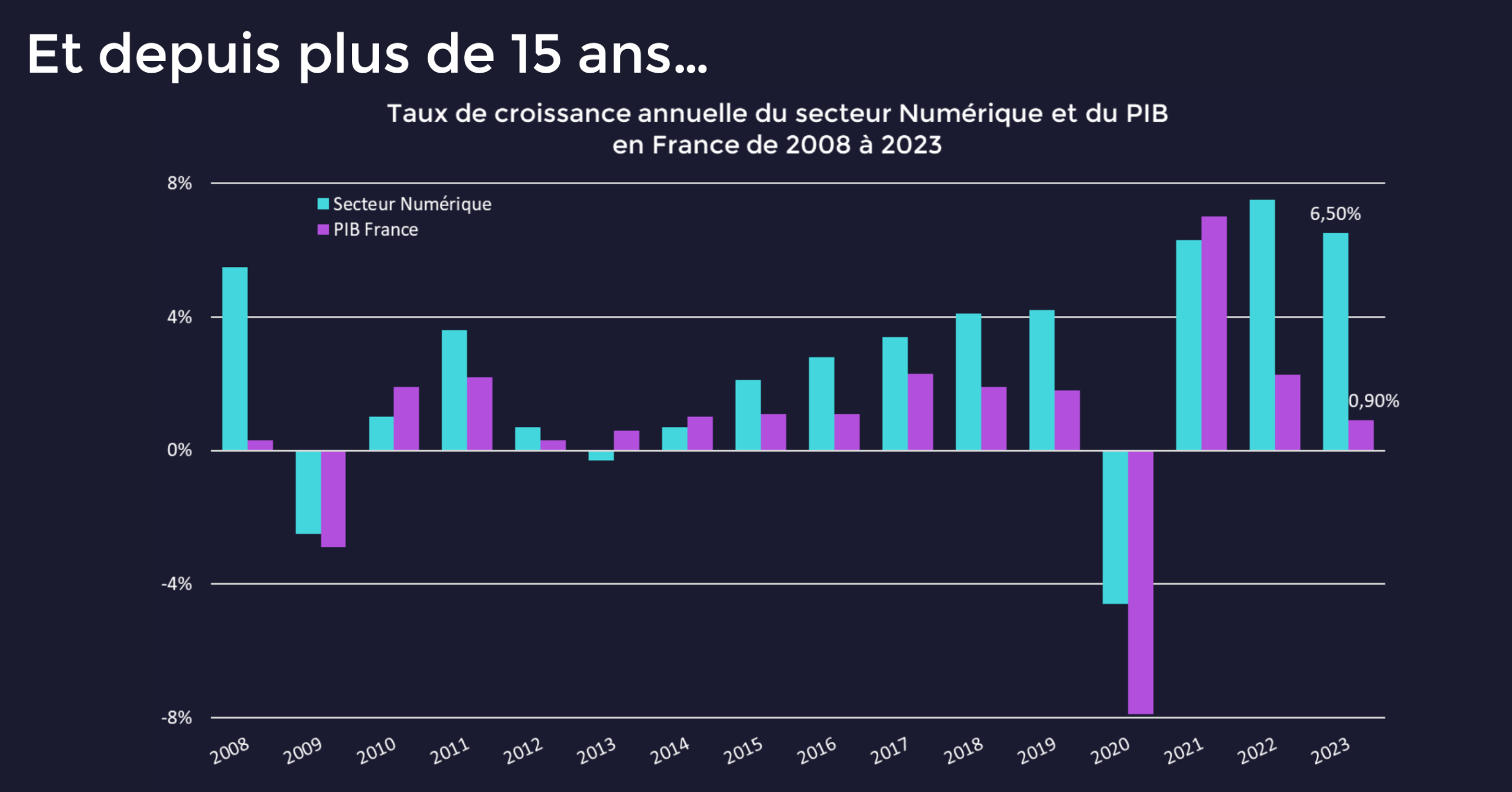

French IT Service Companies Market: 2023 Overview and 2024 Perspectives
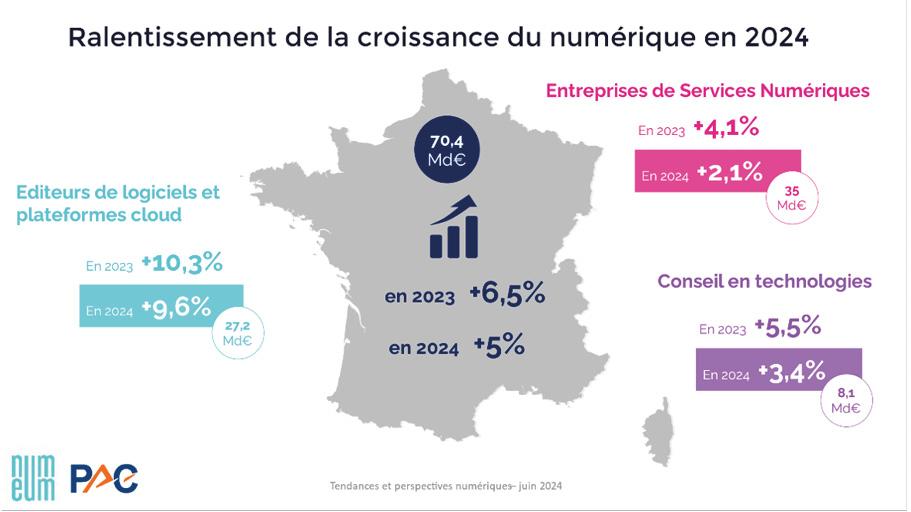
Numeum's Biannual Market Barometer for IT service companies and ICTs

Solutions to Address the Business Challenges of IT Services Companies
Testez l’expérience.